

Kids rarely announce that their eyesight has changed. They just adapt: sitting closer to the TV, squinting at the whiteboard, or holding a book right up to their nose. You’ll likely notice these small adjustments before your child ever says a word.
The clearest sign your child’s prescription has changed is a change in behavior, not a complaint about blurry vision. Kids adjust to blurry eyesight so gradually that they often don’t realize anything is wrong. A children’s eye exam can pick up on those changes early, sometimes well before your child notices anything different. If any of the signs below sound familiar, go ahead and book an appointment soon.
Behavioral Signs to Watch for at Home
A handful of habits tend to show up when a child’s vision changes. Keep an eye out for:
- Sitting unusually close to the TV or holding tablets and books inches from their face
- Squinting or covering one eye to see more clearly
- Rubbing their eyes frequently
- Pulling back from reading or avoiding activities that need close focus
- Tilting their head
- Losing their place while reading
None of these habits automatically mean something’s wrong. But each one is worth a trip to the optometrist. Kids adapt fast, and what looks like a quirky habit might actually be their eyes compensating for blurry vision. A comprehensive eye exam can identify what a quick school vision screening won’t.
When Vision Trouble Shows Up at School
Vision problems often surface in the classroom before they show up anywhere else. Watch for clues your child brings home without saying a word.
If your child can’t read the board from their seat, their grades in reading or other visual subjects may start to slip. Frequent headaches during homework or after school can point to eye strain from an outdated prescription.
Teachers spend hours watching kids work, so they often notice things parents miss. A child who squints at the board, loses their place while reading, or seems worn out after class might be dealing with more than a hard lesson.
Once your child gets new glasses or contacts, let their teacher know. Ask about moving your child’s seat closer to the board while they adjust to the updated lenses. It’s a small request, and it can make a real difference in how your child’s day goes.
How Often Does a Child’s Prescription Change?
Kids’ eyes change fast, and how often depends a lot on their age.
Between ages 5 and 7, farsightedness is common and usually resolves on its own as the eyes develop. Ages 8 to 14 carry a higher risk for myopia to appear or increase, sometimes quickly, so this age range calls for closer monitoring.
Here’s something a lot of parents don’t realize: when a child grows taller, their eyes can grow longer too. A longer eye changes how light focuses inside it, and that can change a prescription. Schedule exams every 6 months instead of once a year during growth spurts, so you can catch changes before they affect your child’s day-to-day life.
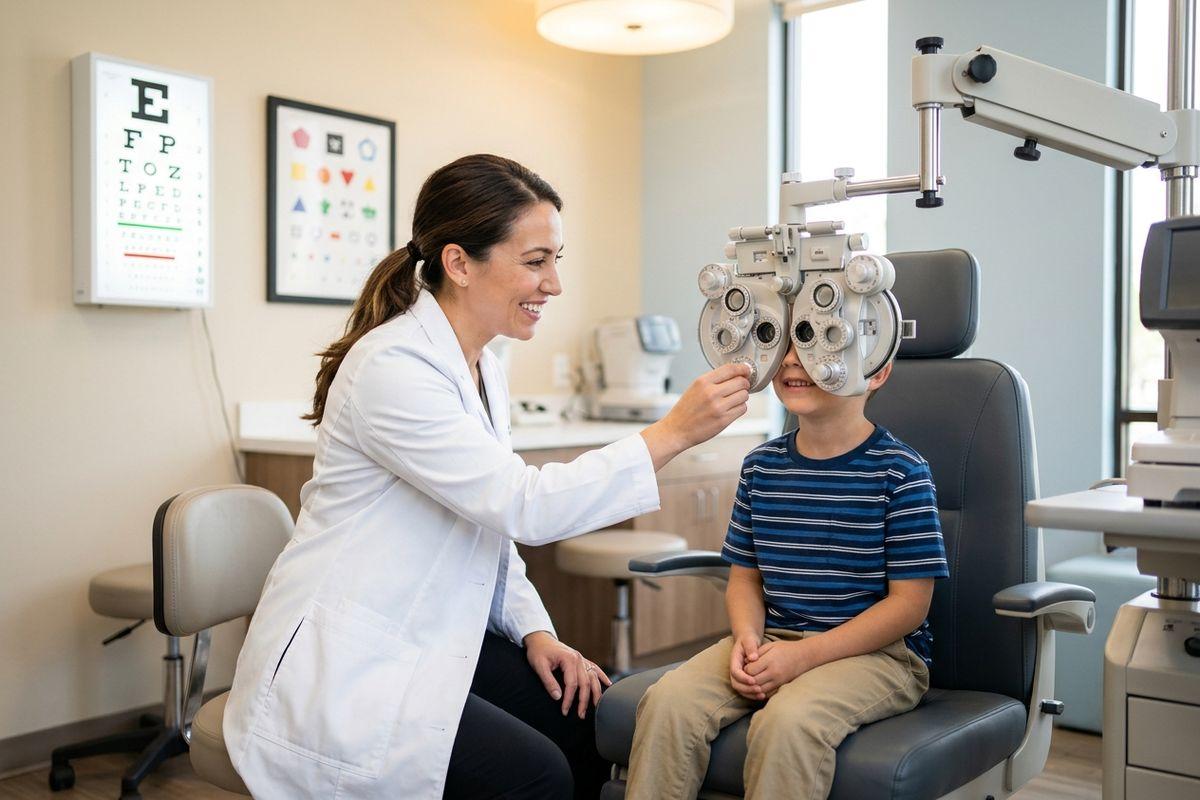
Myopia Progression and Management Options
Myopia that increases steadily over time raises the risk of certain eye health concerns later in life. Act early, since your child’s growing years give you the most room to work with.
Talk to your optometrist about a few approaches that may help slow the progression:
- Ask about specialty contact lenses built for myopia control, which may help reduce how quickly it progresses
- Consider orthokeratology, which uses rigid lenses worn overnight to reshape the cornea and temporarily improve daytime vision without glasses
- Get your child at least 90 minutes of outdoor time a day, which research has linked to slower myopia progression
Single vision lenses correct your child’s central focal point, but they can also send a signal that tells the eye to keep growing. That’s why it’s worth exploring myopia-specific options if your child’s prescription keeps changing year after year.
When It’s Time to See an Optometrist
For most kids, an annual comprehensive eye exam keeps their prescription current and identifies changes early. During growth spurts, twice-yearly visits give you and your optometrist a clearer picture of how fast things are changing.
Some symptoms shouldn’t wait for a scheduled appointment. Call your optometrist right away if your child has:
- Sudden blurry vision, double vision, or a severe headache that comes on quickly
- A habit of tilting their head or repeating certain movements to see more clearly
- Trouble seeing at night or new sensitivity to light
These signs can point to something that needs a closer look sooner rather than later, so don’t wait it out.
Keep Your Child’s Vision on Track
Children’s eyes change fast, and prescriptions often change quietly in the background before anyone notices. Pay attention to your child’s behavior, keep up with routine exams, and act quickly when something seems off.
The team at Total Vision El Cajon can help you stay on top of your child’s vision at every stage of their growth. If you’ve noticed any of the signs above, or it’s just been a while since their last exam, schedule an appointment today.